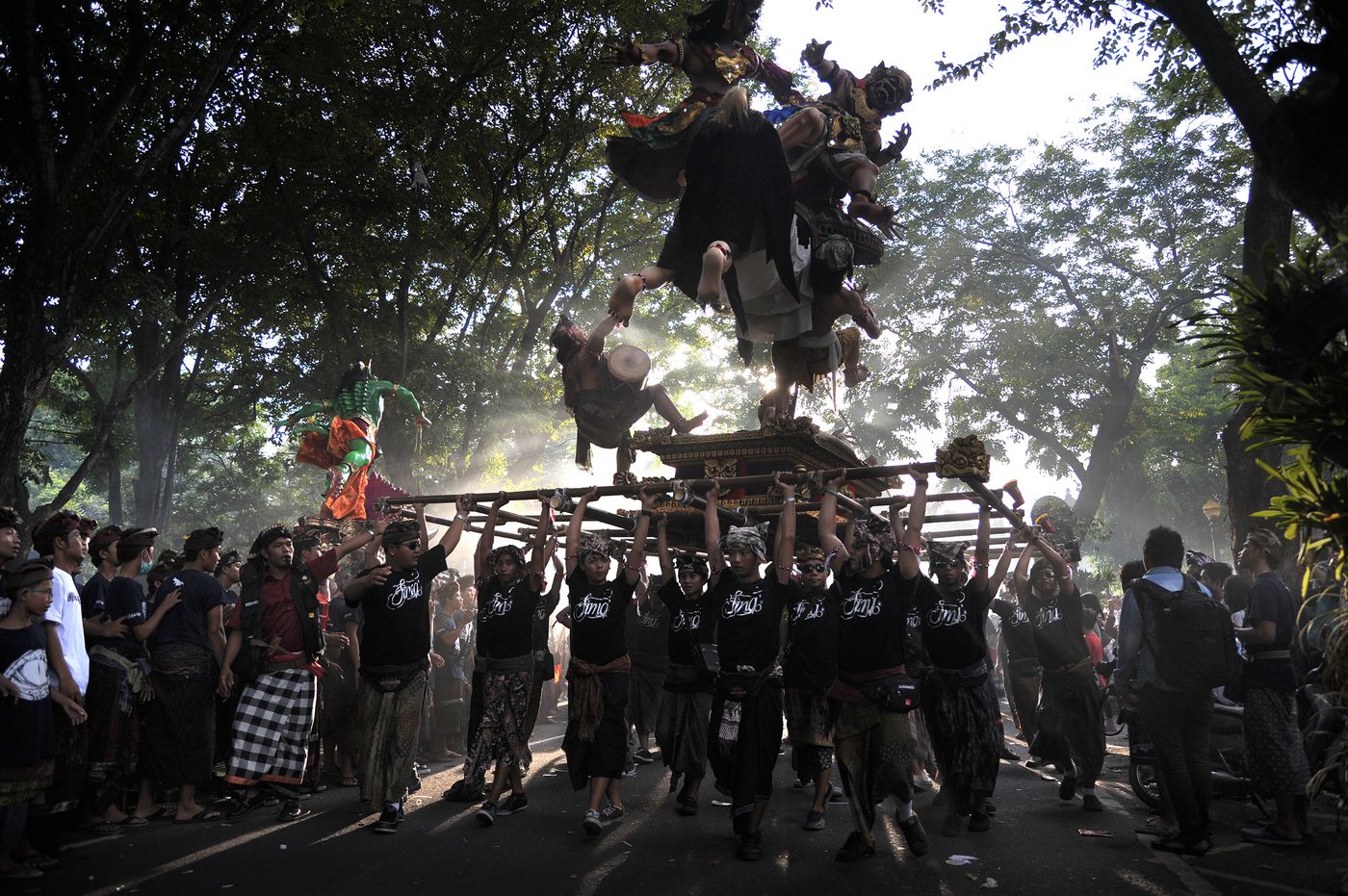
Quick answer: Nyepi 2027 falls on Monday 8 March, from 6 am that day to 6 am on Tuesday 9 March, with ogoh-ogoh parades on the evening of Sunday 7 March. For those 24 hours no boats run, and visitors must stay inside their accommodation, quietly, with lights low.
Nyepi is the Balinese new year, and it's unlike any holiday you've seen. For 24 hours the whole of Bali, including Lembongan, Ceningan and Penida, goes silent: no traffic, no boats, no flights, no work, and almost no lights. It follows a night of noise and giant demon effigies. If your trip includes it, it can be one of the most memorable days you spend here.
| Date (2027) | What happens |
|---|---|
| Days before | Melasti purification ceremonies, with processions to the sea. |
| Sunday 7 March, evening | Ogoh-ogoh parades: villages carry huge demon effigies through the streets. |
| Monday 8 March, 6 am | Nyepi begins. Silence for 24 hours. |
| Tuesday 9 March, 6 am | Nyepi ends. Boats and life resume. |
The night before: ogoh-ogoh
On the eve of Nyepi, villages parade their ogoh-ogoh, giant papier-mâché demons built over weeks by the local youth, with drums, gongs and torches. The idea is to make enough noise to chase evil spirits away, so the island is empty and silent the next day. Visitors are welcome to watch from the roadside: give the parade space, and don't block the route for photos.
The Day of Silence
From 6 am on Nyepi, everyone on the island, visitors included, stays home. For you that means staying within your hotel or villa grounds for the full 24 hours. Roads and beaches are closed. Local community guards, the pecalang, patrol to make sure the silence is kept.
- Stay in: no walking, riding or swimming outside your accommodation.
- Lights low: after dark, keep lights dim and curtains closed.
- Quiet: no music, no loud voices.
- Food: shops and restaurants are closed. Most places to stay feed their guests, but ask, and stock up the day before.
Mobile data may be reduced or switched off in some years. Wi-Fi often keeps working, but don't count on it. In return you get the clearest night sky of the year.
Boats and travel
No boats cross between Bali and the islands during Nyepi, and Bali's airport is closed. Arrive on Lembongan at least the day before, and plan to leave no earlier than the day after. In 2027 Nyepi falls inside a long run of public holidays in Indonesia, roughly 6 to 15 March, so expect boats and rooms to be busy either side. Book ahead. Getting there.
Nyepi Laut: the silence of the sea
The Nusa islands also keep a separate day of silence for the sea, Nyepi Laut (also called Nyepi Segara). For that day boats between Bali and the islands stop, and fishing, snorkelling and diving pause. It follows the Balinese calendar, usually falling in September or October, and the date is announced locally a few weeks ahead. If you're travelling at that time of year, ask your boat company before you book. When to go.
Questions
When is Nyepi 2027?
Monday 8 March 2027. The silence runs from 6 am on 8 March to 6 am on Tuesday 9 March. The ogoh-ogoh parades are on the evening before, Sunday 7 March.
Do boats run to Nusa Lembongan on Nyepi?
No. All boats between Bali and the Nusa islands stop for the 24 hours of Nyepi, and Bali's airport closes too. Arrive at least a day before and don't plan to leave until the day after.
What can tourists do on Nyepi?
Stay within your hotel or villa grounds. Keep noise down, keep lights low and curtains closed at night. Most places still serve guests food, but check in advance.
What is Nyepi Laut?
A separate day of silence for the sea, held locally around the Nusa islands, usually in September or October. For that day boats between Bali and the islands stop and water activities pause.
Header photo: Dedy Siswandi, CC BY-SA 4.0, via Wikimedia Commons
 Gala-Gala house
 Money and ATMs
 Choosing a fast boat
