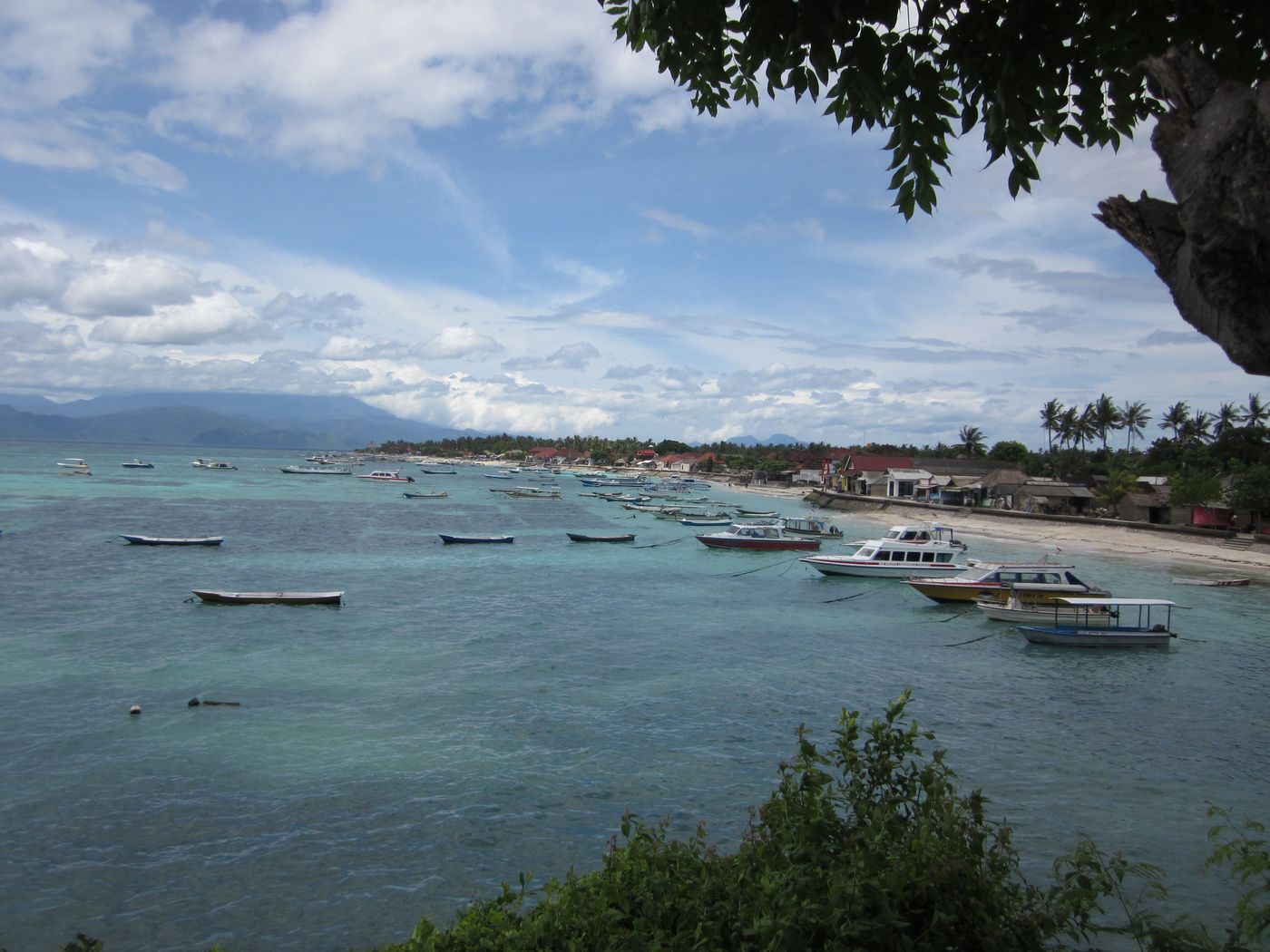
Quick answer: Bring a good amount of rupiah from Bali. Lembongan has fewer than ten ATMs, mostly around Jungutbatu, they charge fees and can run out of cash at busy times. Larger cafés and places to stay take cards; warungs, drivers and small shops often want cash.
The currency is the Indonesian rupiah, and on Lembongan cash still does a lot of the work. Payment by card and QR code has spread fast, but the island's ATMs are few, and on a busy weekend one of them being empty is not unusual. A little planning saves a frustrating search.
Bring cash from Bali
The simplest advice: take out enough rupiah in Bali before your boat to cover your first few days, in a mix of notes. Small notes are useful, as change can be short in little shops and warungs. Keep it split between your bag and your room.
ATMs on the island
There are fewer than ten ATMs, most of them in and around Jungutbatu, with a few elsewhere. Expect a fee of roughly Rp25,000 to Rp50,000 a withdrawal, plus whatever your own bank charges, and a fairly low limit per transaction. Machines can run out of cash or go offline, especially at weekends and in the busy season. When the screen offers to convert to your home currency, decline and choose rupiah: the rate is usually worse.
Cards
Many of the larger cafés, restaurants, dive and snorkel operators and places to stay take cards, sometimes adding a small surcharge. Smaller warungs, drivers, scooter rentals and shops often want cash. If a card machine offers to charge you in your home currency, choose rupiah.
QRIS, the QR codes everywhere
You'll see QRIS codes on counters across the island. It's Indonesia's national QR payment standard, and it needs an Indonesian e-wallet or bank app. Some visitors set up a local e-wallet using a passport and an Indonesian phone number, and visitors from some nearby countries can pay with their own banking apps. If none of that applies to you, cash is simpler. Mobile signal can be patchy in places, which also affects QR payments.
Money changers
There are a few money changers on the island, but rates are usually better in Bali. Count your money before you leave the counter, and use places with a printed rate board and receipts.
Service charges and tipping
Many restaurants add a service charge and government tax to the bill, often shown on the menu as "++". Tipping isn't required, but rounding up, or a small tip for boat crews, guides, drivers and the people who clean your room, is appreciated.
How much to carry
For a day trip, enough for lunch, transport, the island levy and a few small fees. For a longer stay, a few days' worth at a time, topped up when you pass an ATM that's working. What a trip costs.
Questions
Are there ATMs on Nusa Lembongan?
Yes, but not many: fewer than ten, mostly around Jungutbatu. Withdrawal fees of roughly Rp25,000 to Rp50,000 are common, on top of your bank's charges, and machines can run out of cash on busy weekends.
Can I use a card on Nusa Lembongan?
At many larger cafés, restaurants, dive centres and places to stay, yes, sometimes with a surcharge. Small warungs, drivers, scooter rentals and shops often take cash only.
Can tourists use QRIS on Nusa Lembongan?
QRIS codes are everywhere, but they need an Indonesian e-wallet or bank app. Some visitors set one up with a passport and a local number; some foreign banking apps from nearby countries also work. Otherwise, use cash.
Should I tip on Nusa Lembongan?
Tipping isn't expected but is appreciated, especially for boat crews, guides, drivers and housekeeping. Many restaurants already add a service charge and tax to the bill.
Header photo: Sho Horiuchi, CC0, via Wikimedia Commons
 Choosing a fast boat
 Things to do
